

UX & Conversion Findings
Page-by-page analysis with visual comparisons against top Home & Living stores
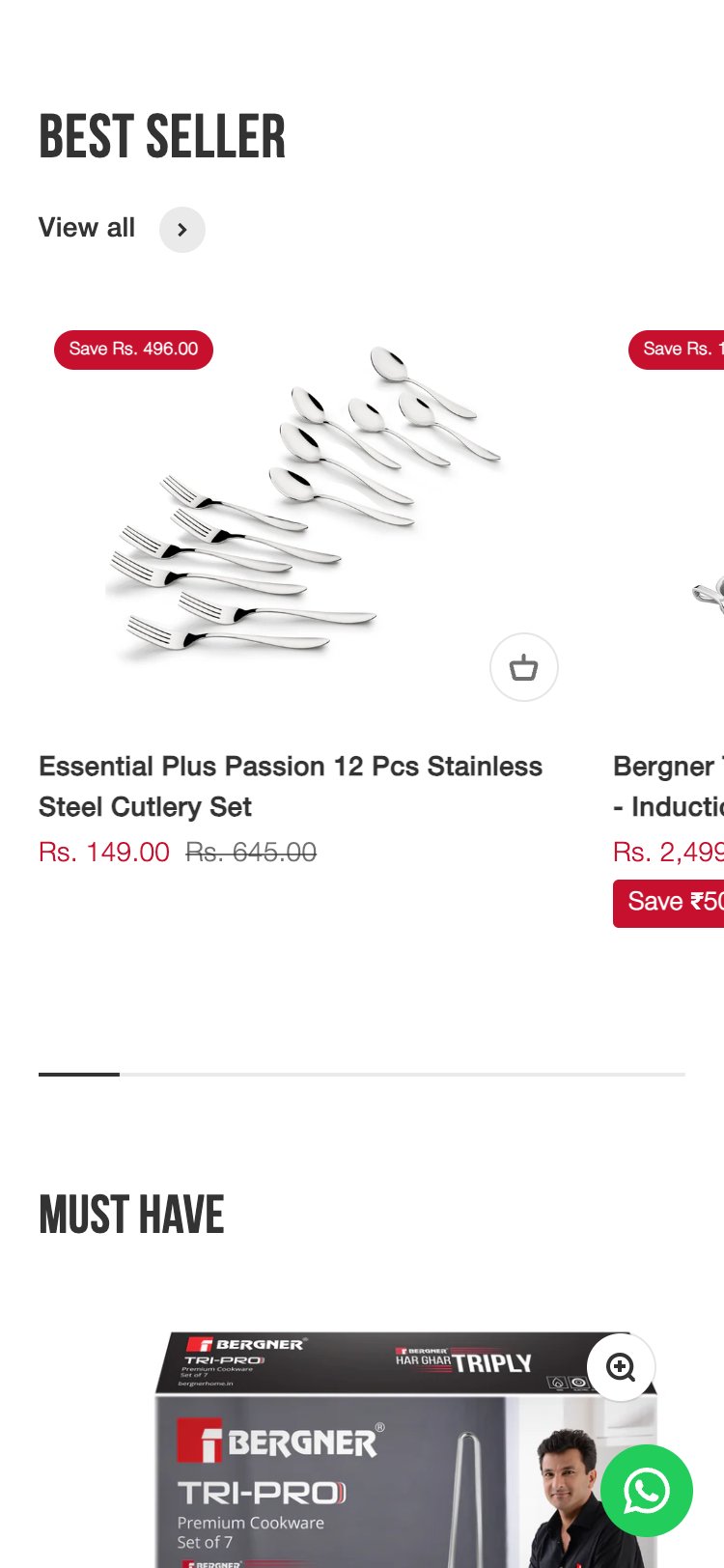
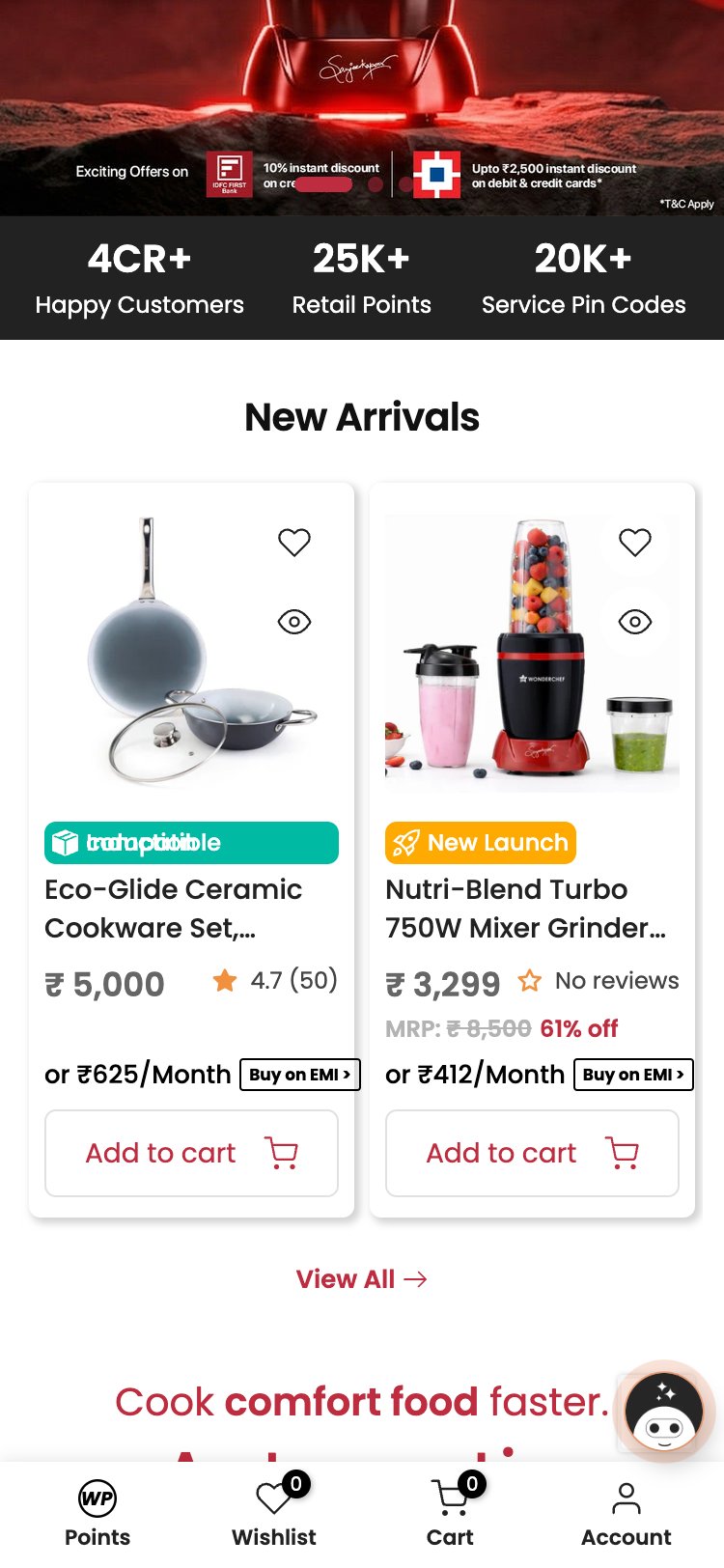
- No review widget, star ratings, or review count is visible anywhere on the Bergner Home site — not on the homepage product cards, not on PDPs, not in collections.
- The PDP for BGIN-7833 shows product title, SKU, price, and variants — no star rating widget, no review count, no customer testimonials.
- Zero reviews is confirmed across all tested PDPs. No review app (Judge.me, Loox, Yotpo) is installed.
- Benchmark data shows star ratings on PDP are standard on 6/10 top Home & Living stores. Without ratings, Bergner loses the single most-trusted trust signal at the moment of purchase consideration.
- Install a review app (Judge.me or Loox) and run a post-purchase review collection campaign to seed initial reviews within 30 days.
- Display star ratings on PDP immediately below the product title, and on collection/homepage product cards as a star count overlay.
- Import existing ratings from Amazon India listings (if available) to bootstrap social proof before organic reviews accumulate.
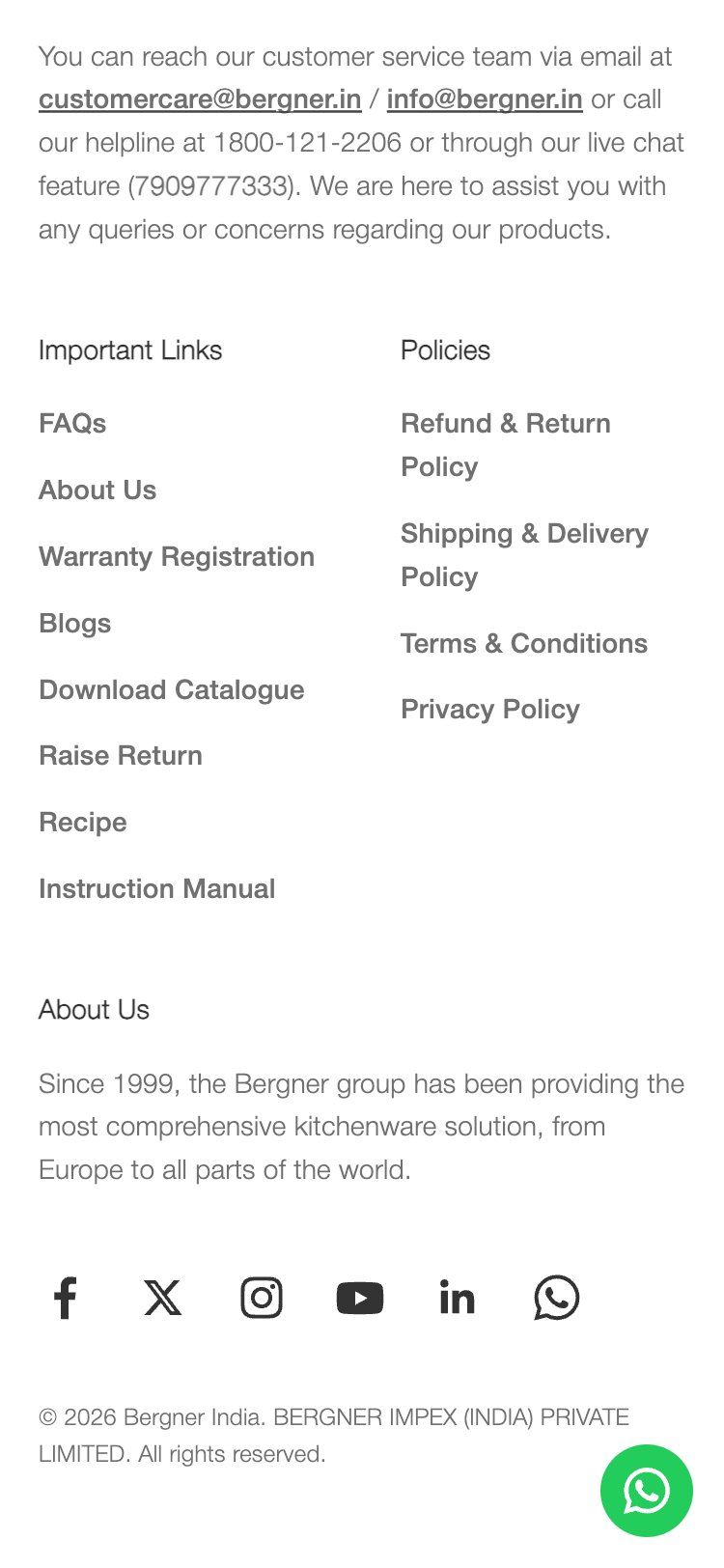
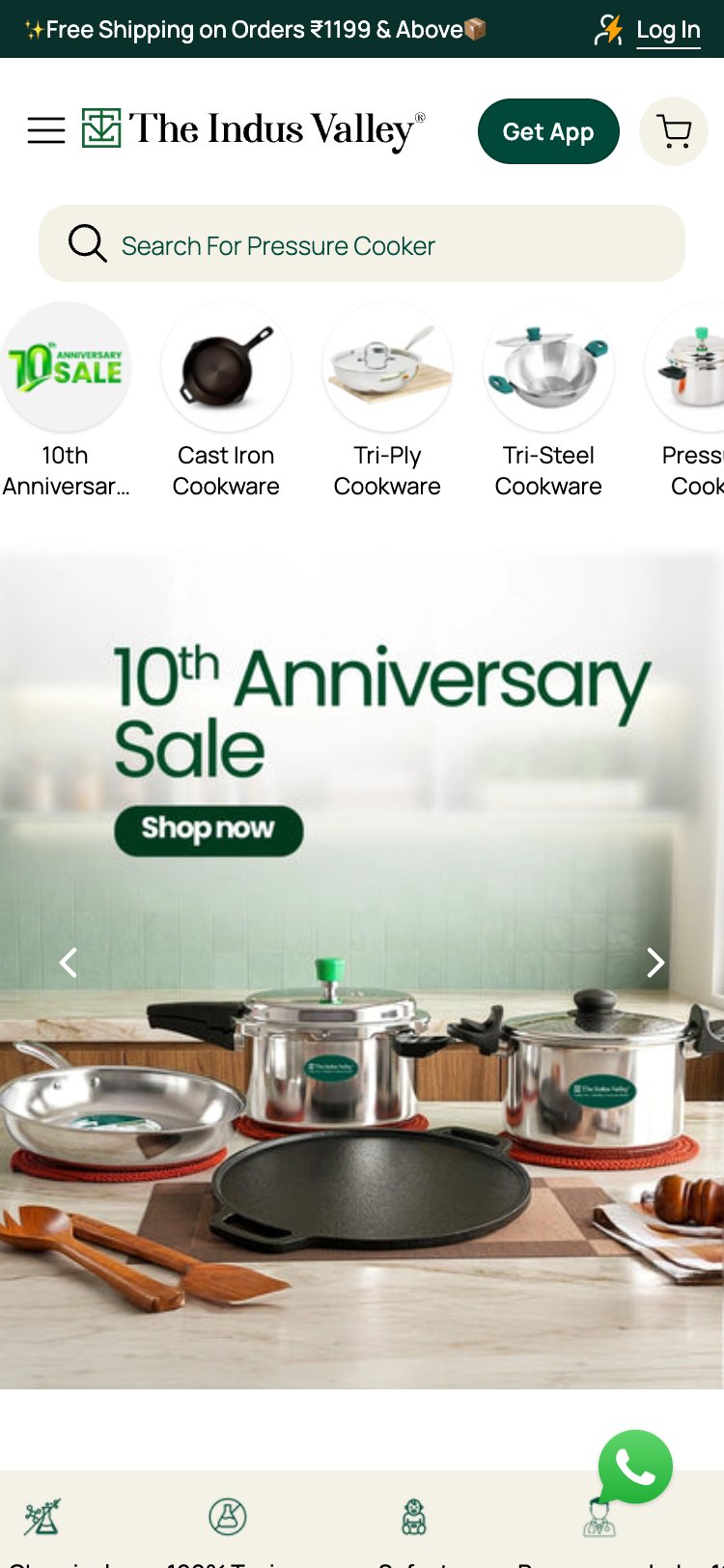
- The Bergner Home homepage does not display any scale metrics such as 'X Lakh customers', 'X orders delivered', or 'X years of trust'.
- The bottom of the homepage shows only a single press-style quote with no attribution ('Surprisingly great quality...'). No reviewer name, no star rating, no verified buyer indicator.
- Benchmark data shows 3/5 Indian D2C stores use scale metrics as a homepage trust anchor (Wakefit: '25 Lakh+ customers'; The Indus Valley: '10 Lakh+ happy families').
- Bergner is a 25-year-old brand (logo shows '25 Years') — this legacy is not leveraged anywhere on the homepage as a trust signal.
- Add a trust bar below the hero with 3 metrics: years in business (25+), countries sold (highlight the global brand), and products sold/customers served.
- Replace the anonymous press quote with verified customer quotes showing name, city, and product purchased.
- Leverage the '25 Years' anniversary prominently — add a dedicated homepage strip: 'Trusted by X Lakh Indian homes since 1999'.
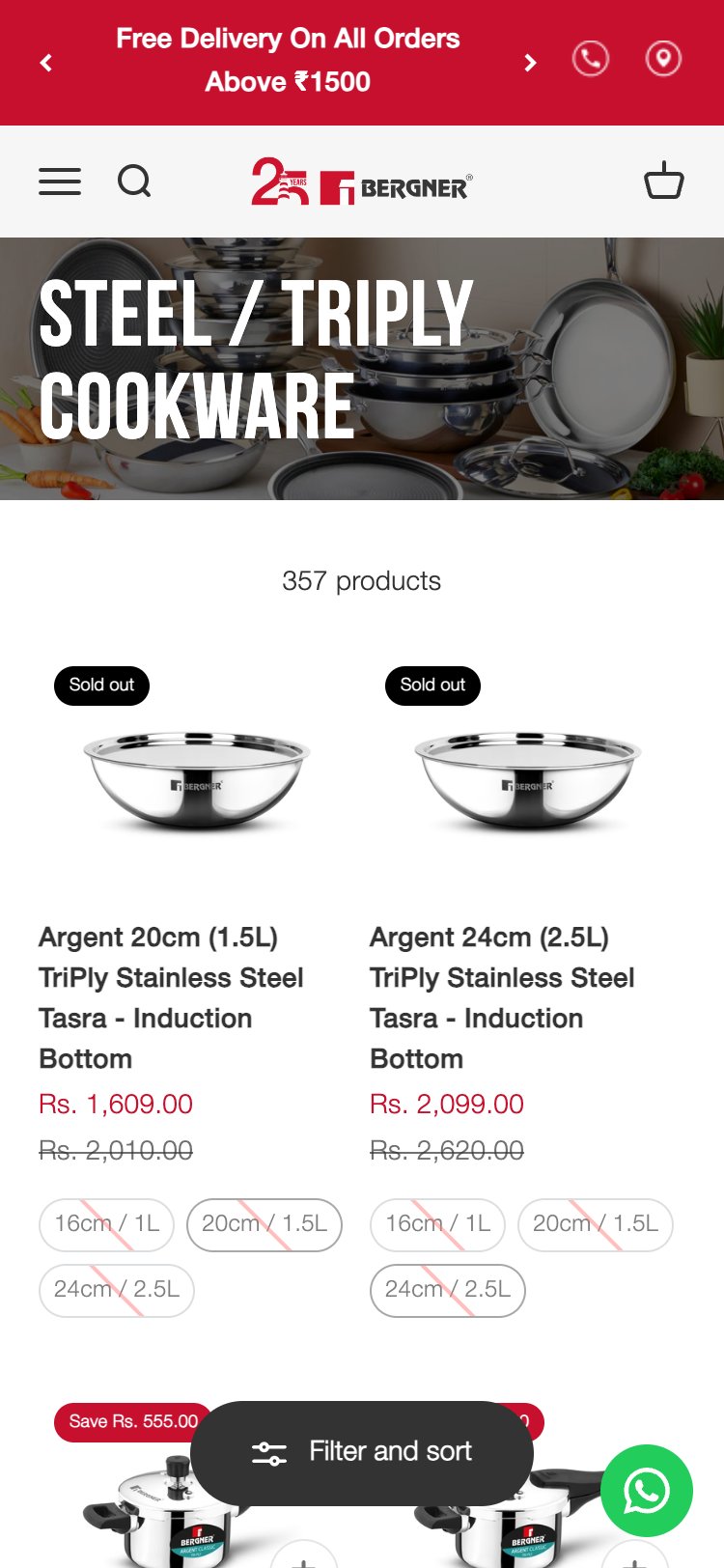
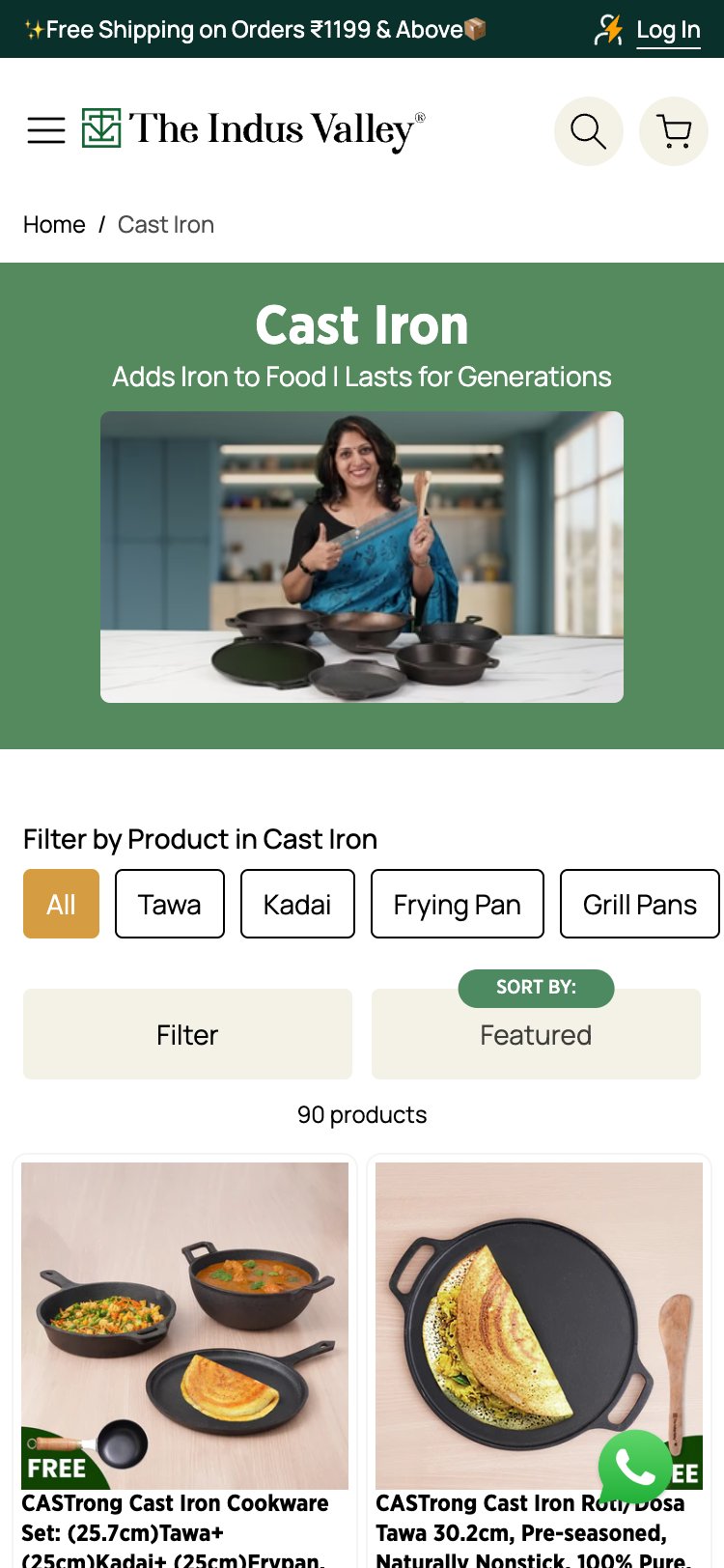
- All product cards on Bergner Home collections show 'Save Rs. X.00' badges (e.g. 'Save Rs. 2,686.00') — no percentage discount is displayed.
- Shoppers scanning a collection page make faster decisions when they see a % off badge — '57% OFF' is more attention-grabbing than 'Save Rs. 2,686.00' which requires mental math.
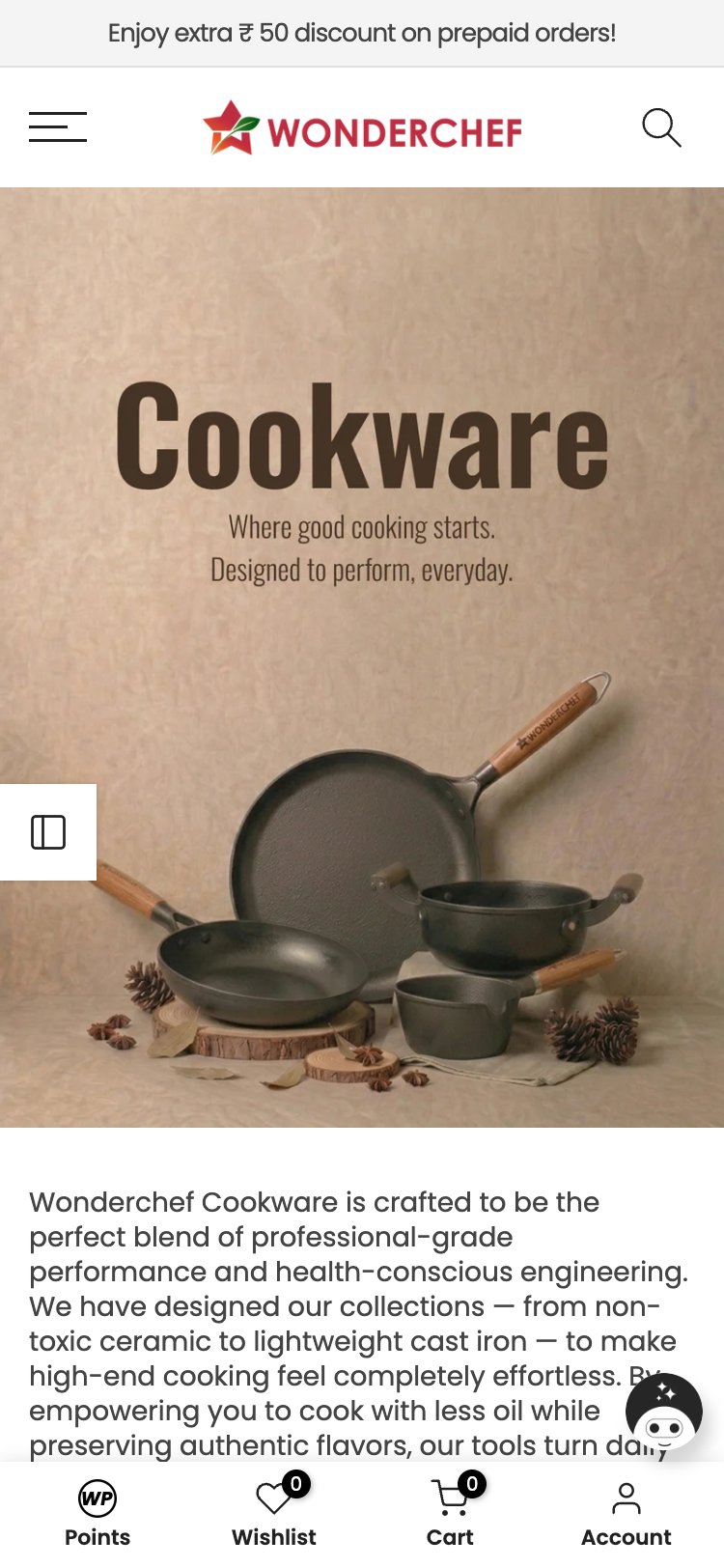
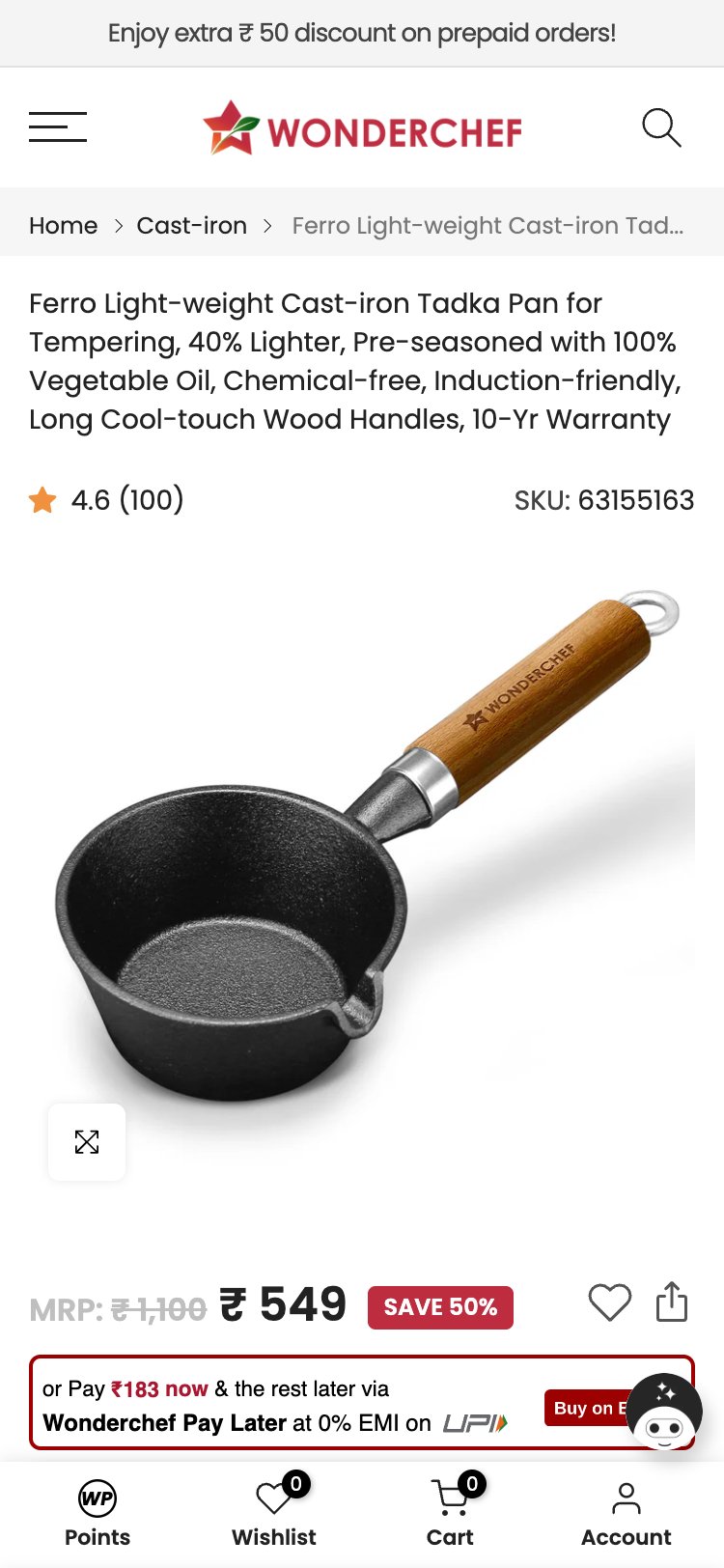
- Benchmark data: 6/10 top Home & Living stores display % discount badges on collection cards. Pepperfry and Wonderchef both show percentage off.
- The current rupee-amount approach also makes it harder to compare discounts across price points — a shopper cannot instantly tell if a Rs. 500 saving on a Rs. 1,000 product is better or worse than a Rs. 2,000 saving on a Rs. 10,000 product.
- Replace or supplement 'Save Rs. X' badges with percentage badges. Show '57% OFF' as the primary badge; add 'Save Rs. 2,686' as secondary text for clarity.
- Prioritize % badge for products with >40% discount — these are the highest-urgency items and the % figure drives clicks.
- Hovering or tapping on any product card on the collection page only shows the product image and a small 'Add to cart' button — no quick-view modal or preview overlay.
- No quick-view button appears on hover (desktop) or long-press (mobile). Shoppers must navigate to the full PDP to see product details, images, and specs.
- Benchmark data: Growing pattern, adopted by ~40% of home & living stores. Wonderchef and Pepperfry both offer quick-view overlays.
- Add a quick-view modal triggered by a secondary CTA on collection product cards (e.g. 'Quick View' button on hover/tap).
- The modal should show: product name, key image, price, variant selector, ATC button, and a link to the full PDP.
- This is especially valuable on mobile where switching between collection and PDP adds significant friction.
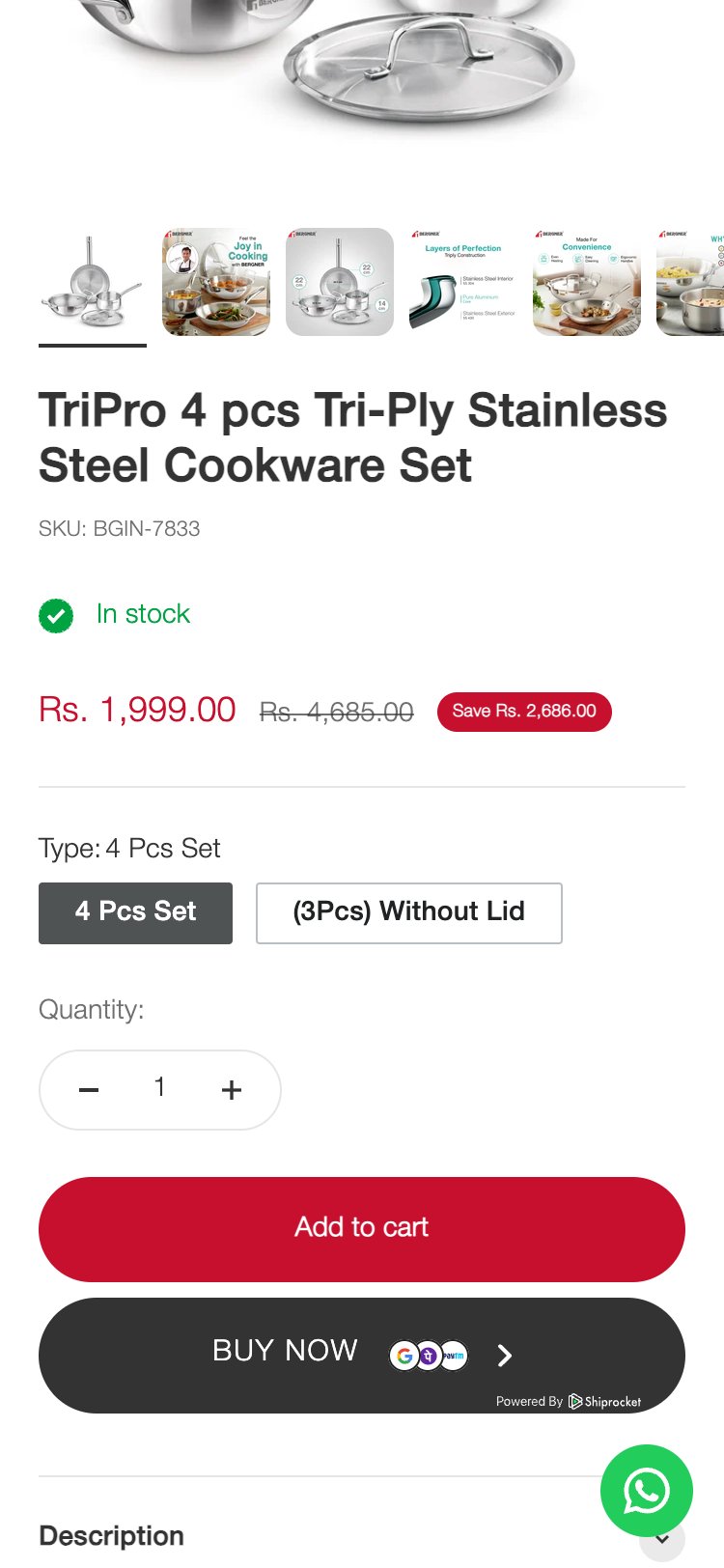
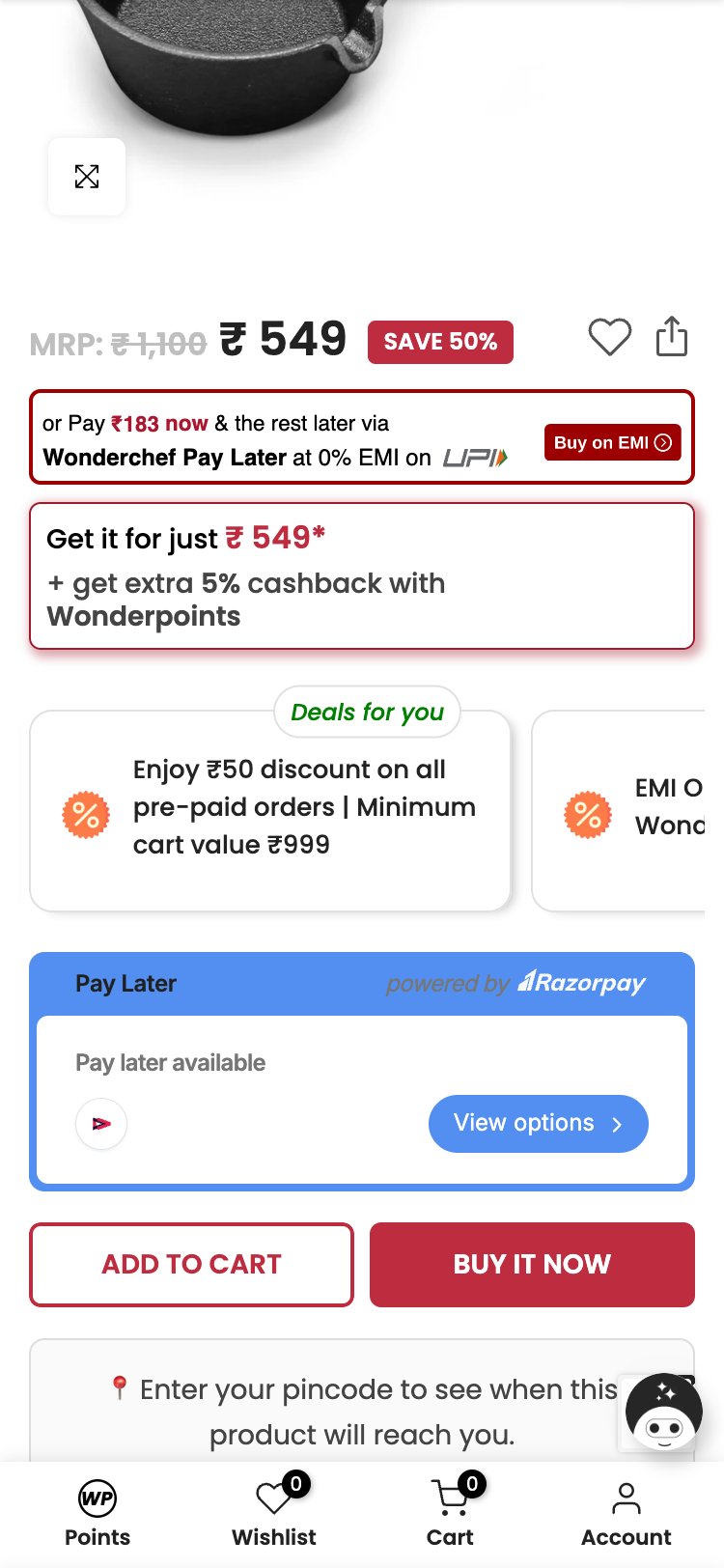
- The PDP for every tested product (BGIN-7833, BGIN-7216) shows zero delivery-related information: no pincode checker, no estimated delivery date, no 'ships to your location' confirmation.
- Indian D2C shoppers — especially first-time buyers — need to verify delivery before committing to cart. Absence of this creates abandonment at checkout when they discover delivery is unavailable.
- Pincode delivery check is a growing standard in India: 3/5 Indian home & living stores implement it (Wakefit, The Indus Valley). The benchmark_context flags this as a 60%-adoption pattern.
- Bergner ships via Shiprocket (BUY NOW button shows 'Powered by Shiprocket') — the Shiprocket API supports pincode serviceability checks that can be surfaced on the PDP.
- Add a pincode delivery estimator below the ATC button on all PDPs. Show estimated delivery window (e.g. 'Delivered by Mon, Apr 21') when pincode is entered.
- Integrate with Shiprocket's serviceability API to surface real-time delivery availability.
- Include a 'Free delivery above ₹1500' note adjacent to the pincode checker to reinforce the free shipping threshold.
- The PDP shows sale price, MRP, and variant selector — no EMI widget, no 'Starting at Rs. X/month', no BNPL (Buy Now Pay Later) option from providers like Bajaj Finserv, LazyPay, or ZestMoney.
- Bergner Home has products at Rs. 6,999 (Hitech Kadhai), Rs. 10,995 (MasterPro Multicook), and Rs. 11,625+ — these price points create significant purchase hesitation without EMI.
- EMI is critical for Indian cookware: benchmark data shows 3/5 India stores offer EMI on products above Rs. 5,000 (Wakefit, The Indus Valley).
- The site accepts CCAvenue and PhonePe — both platforms support EMI/BNPL integrations. This is a configuration gap, not a fundamental tech barrier.
- Add a 'No Cost EMI available' notice below the price for products above Rs. 3,999. Display starting EMI amount: 'Starting at Rs. 667/month (6 months, 0% interest)'.
- Integrate Bajaj Finserv EMI or ZestMoney as a BNPL option at checkout — both integrate with Shopify via app.
- Display payment logos (Bajaj, LazyPay, ZestMoney) below the ATC button as trust signals even before checkout.
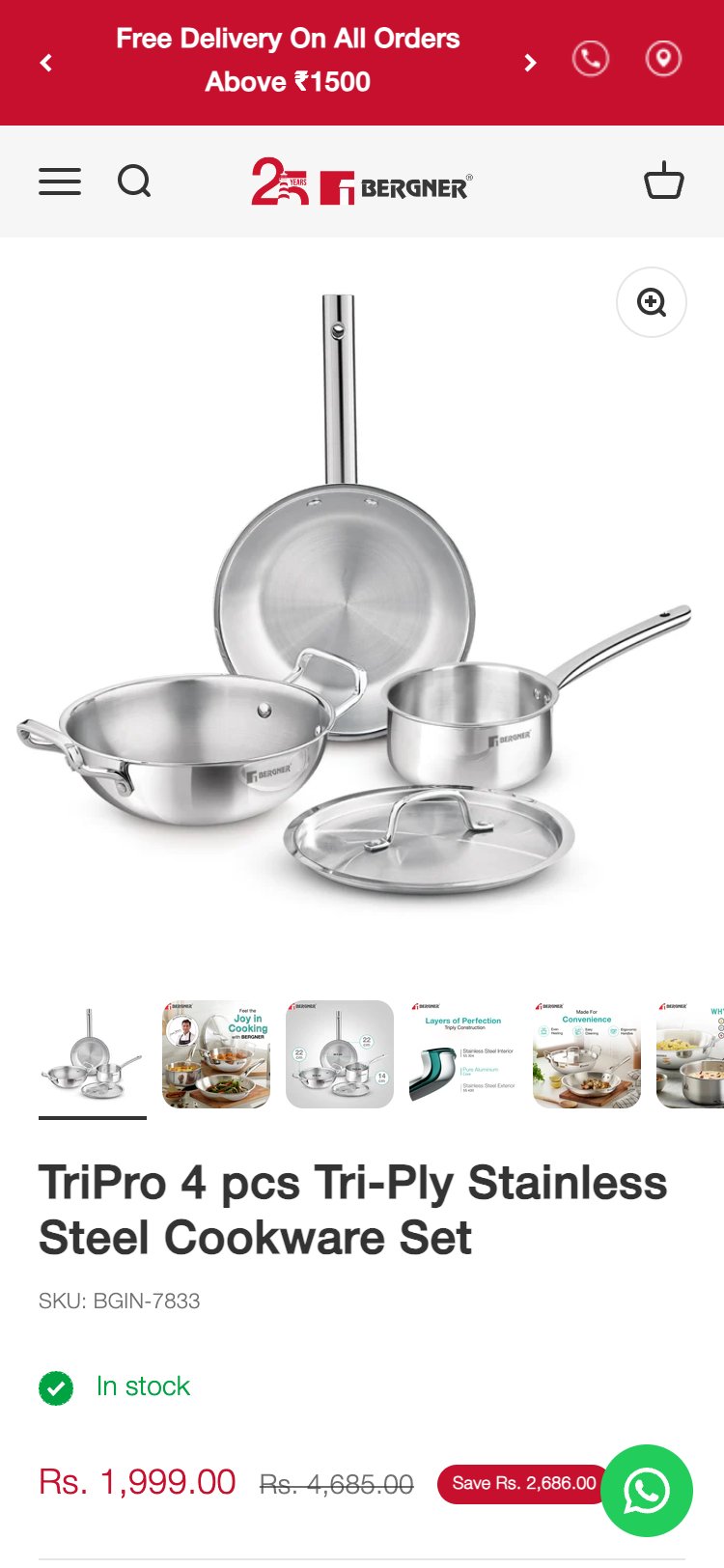
- The PDP description for BGIN-7833 (Tri-Ply Stainless Steel) repeatedly mentions 'induction-compatible' but never explicitly confirms compatibility with gas stoves or electric/ceramic hobs.
- In Indian kitchens, the majority still use gas stoves as primary or secondary cooking surfaces. A shopper seeing only 'induction-compatible' may mistakenly assume the cookware is NOT for gas.
- The feature icon section shows 'Induction Safe', 'Dishwasher Safe', 'BPA Free', '5 Years' — no 'Gas Safe' or 'All Stovetops' icon.
- Benchmark: cookware category notes flag 'Heat compatibility (induction, gas, ceramic) must be visible on PDP' as a critical standard pattern.
- Add an explicit 'Works on: Gas | Induction | Electric | Ceramic' compatibility row to the feature icon strip on every cookware PDP.
- Update product descriptions to lead with 'Compatible with all stovetops including gas, induction, and electric' — not just 'induction-compatible'.
- Add a visual compatibility icons bar (gas flame, induction coil, electric coil icons) that is scannable without reading full description text.
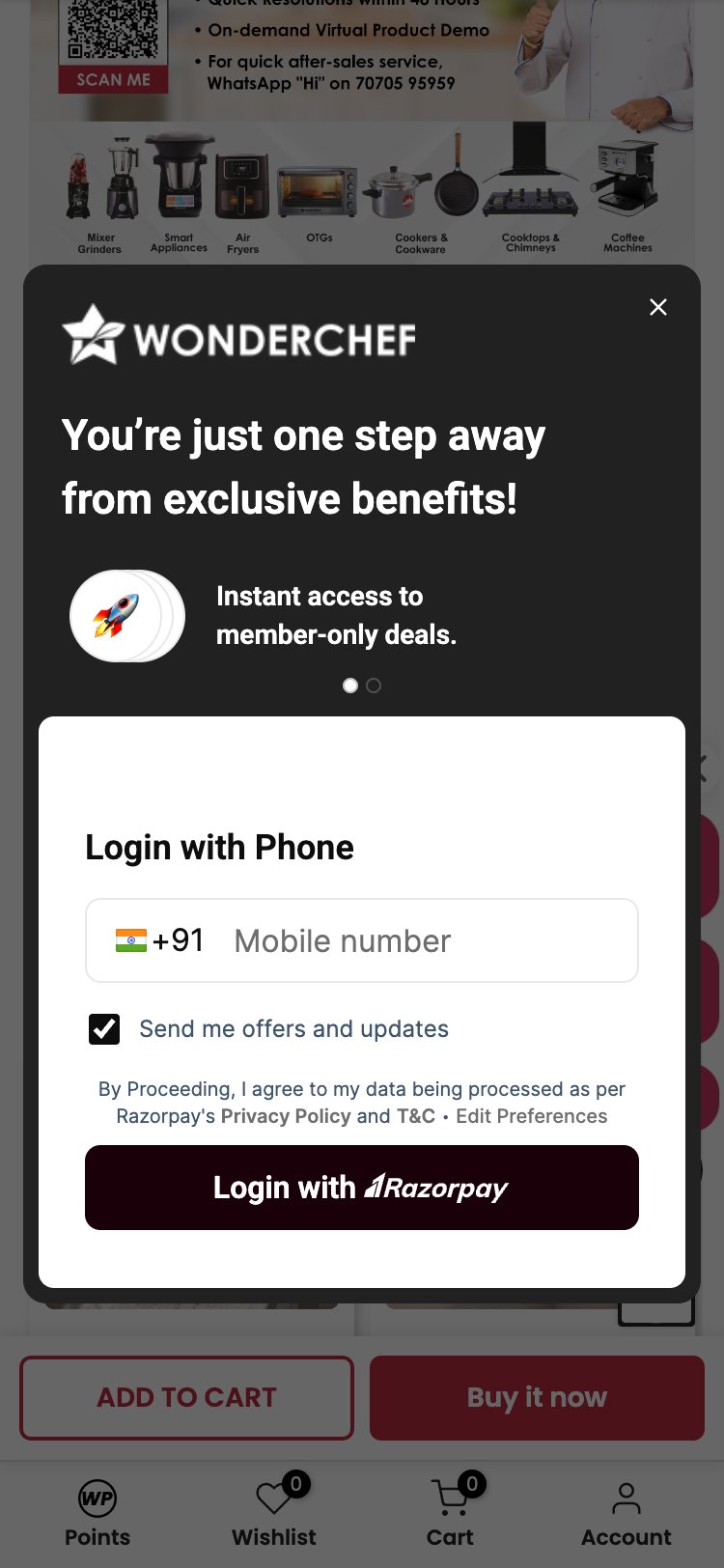
- On mobile (375px viewport), the product image gallery takes up the full viewport. The ATC button is positioned after the image gallery, title, price, and variants — requiring 3+ scrolls to see.
- Once the shopper scrolls past the ATC button to read the Description, USP, and specs, there is no sticky bar to purchase. They must scroll back to the top.
- 79.4% of Bergner Home's traffic is mobile. The Impact v5.4.1 theme supports a sticky ATC feature — it appears to be disabled.
- Benchmark data: sticky ATC on mobile is a growing pattern adopted by ~50% of stores in the home & living benchmark set.
- Enable the sticky ATC panel in the Impact theme settings (Section > Product > Enable sticky add-to-cart). This is a theme config change, not a code change.
- The sticky bar should show: product thumbnail, name, current price, variant selector (if relevant), and the ATC button.
- Ensure the sticky bar appears only after the main ATC button scrolls out of view — not immediately on page load.
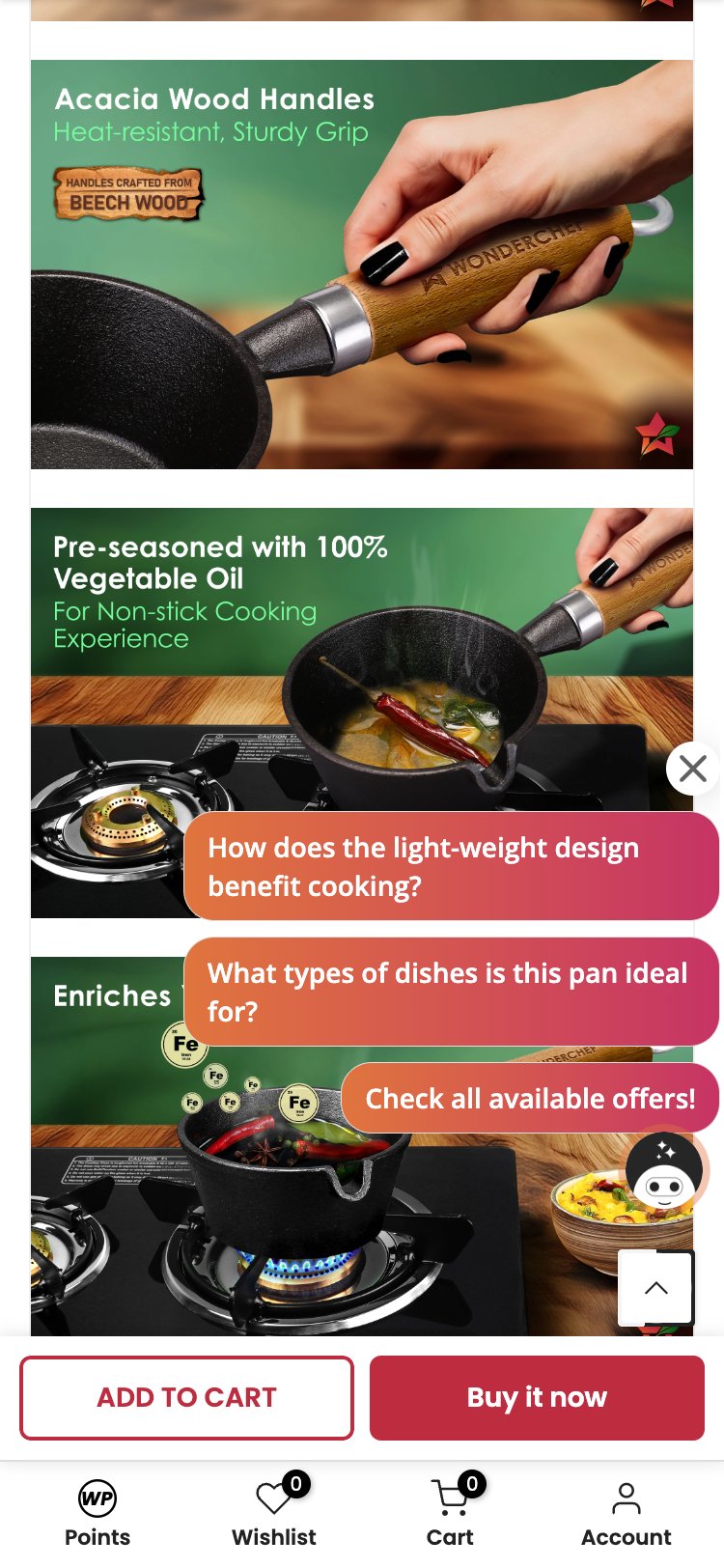
- The PDP feature icon strip shows 'Induction Safe', 'Dishwasher Safe', 'BPA Free', '5 Years' — no FDA, LFGB, ISI, or BIS certification badges.
- For stainless steel cookware, LFGB certification (European food safety standard) and FDA compliance are strong trust differentiators, especially as consumers become more health-conscious.
- The Indus Valley prominently displays 'FDA Approved', 'LFGB Certified' on their cast iron and stainless steel PDPs.
- cookware_category_notes in benchmark_context specifically flags 'Safety certifications (FDA, LFGB, ISI) are trust signals in kitchenware' as a differentiator.
- Audit Bergner Home's product range for any existing certifications (FDA, LFGB, ISI, BIS) and surface these prominently on relevant PDPs.
- Add a 'Certifications' badge strip to PDPs for products that carry food-safety certifications.
- If certifications are not currently held, consider obtaining LFGB certification for top-selling stainless steel lines as a product quality investment.
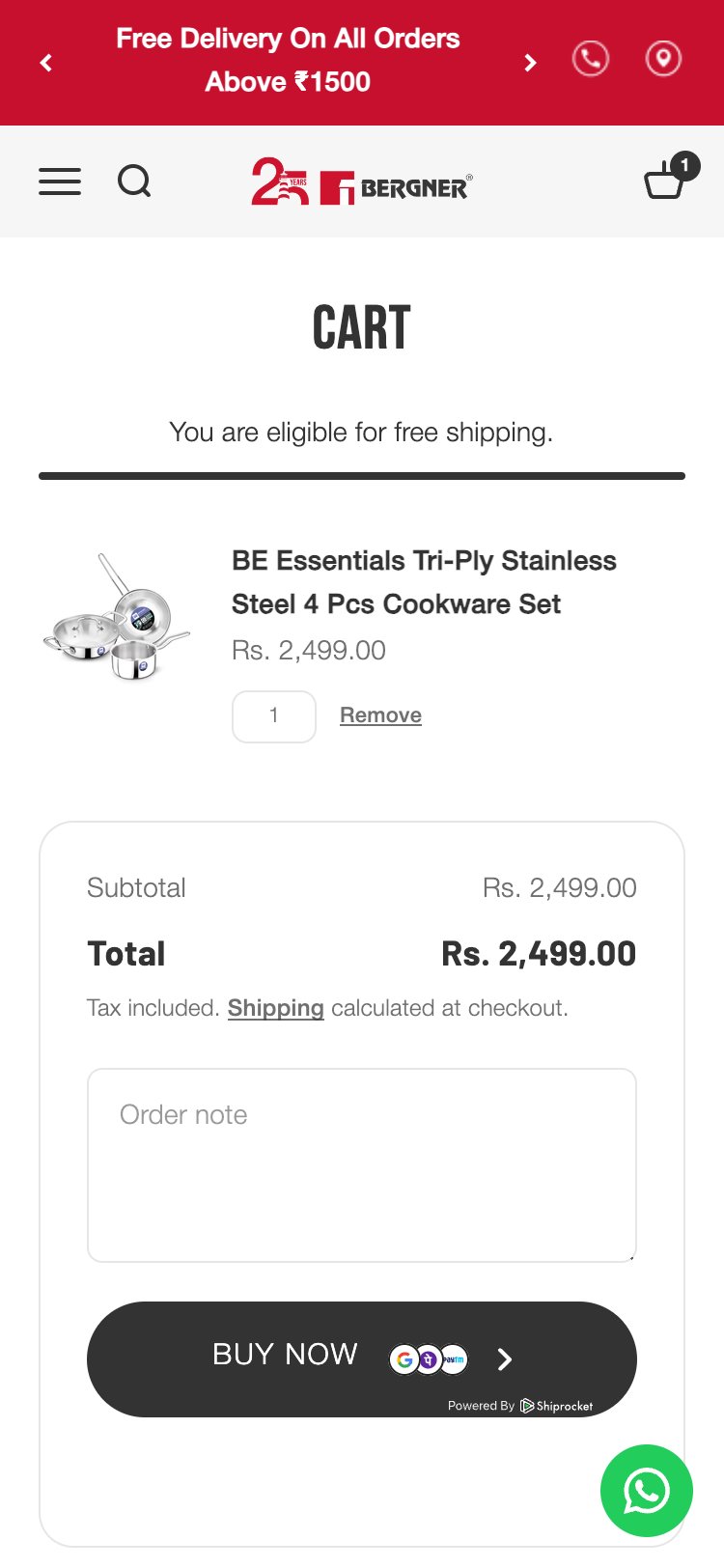
- The Bergner Home cart page shows: free shipping indicator, product row, order note field, subtotal, and BUY NOW checkout button. No coupon/discount code entry field is visible.
- Bergner Home runs promotions ('Offers are live!! Upto 50% Off' in announcement bar) and some product cards show 'Save ₹500 with coupon' — but there is no place to enter these codes in the cart.
- Shoppers who arrive with a coupon code (from email, WhatsApp, or social) and cannot find where to enter it will abandon the cart or contact support.
- Coupon code fields are a growing standard, adopted by ~50% of stores in the home & living benchmark set. Wonderchef and Wakefit both show coupon fields in cart.
- Add a collapsible 'Have a promo code?' field to the cart page, positioned between the order note field and the subtotal row.
- Alternatively, surface the coupon field on the Shopify checkout page (it appears there by default if Shopify native checkout is used — verify this is not suppressed).
- Ensure any coupon codes mentioned in the announcement bar or product descriptions correspond to actual working codes.
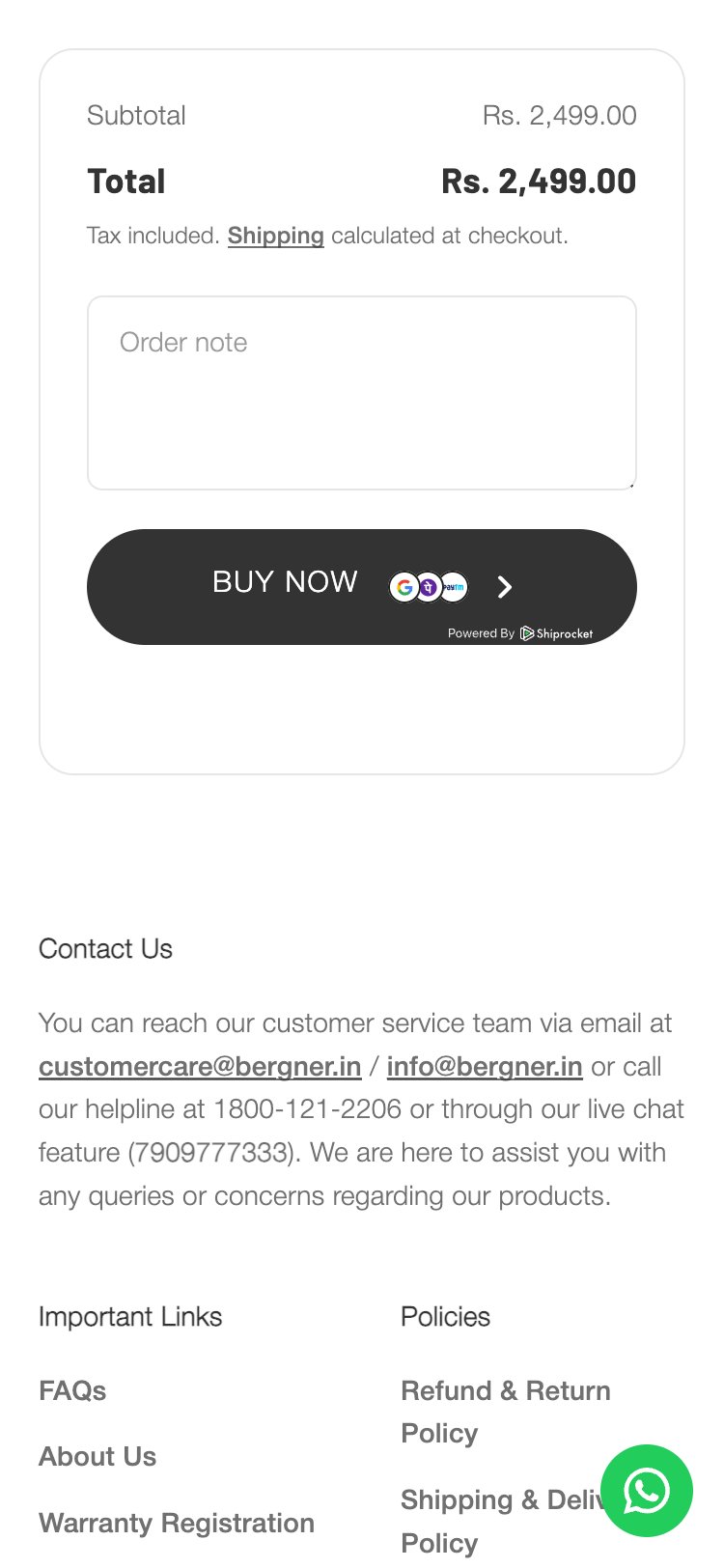
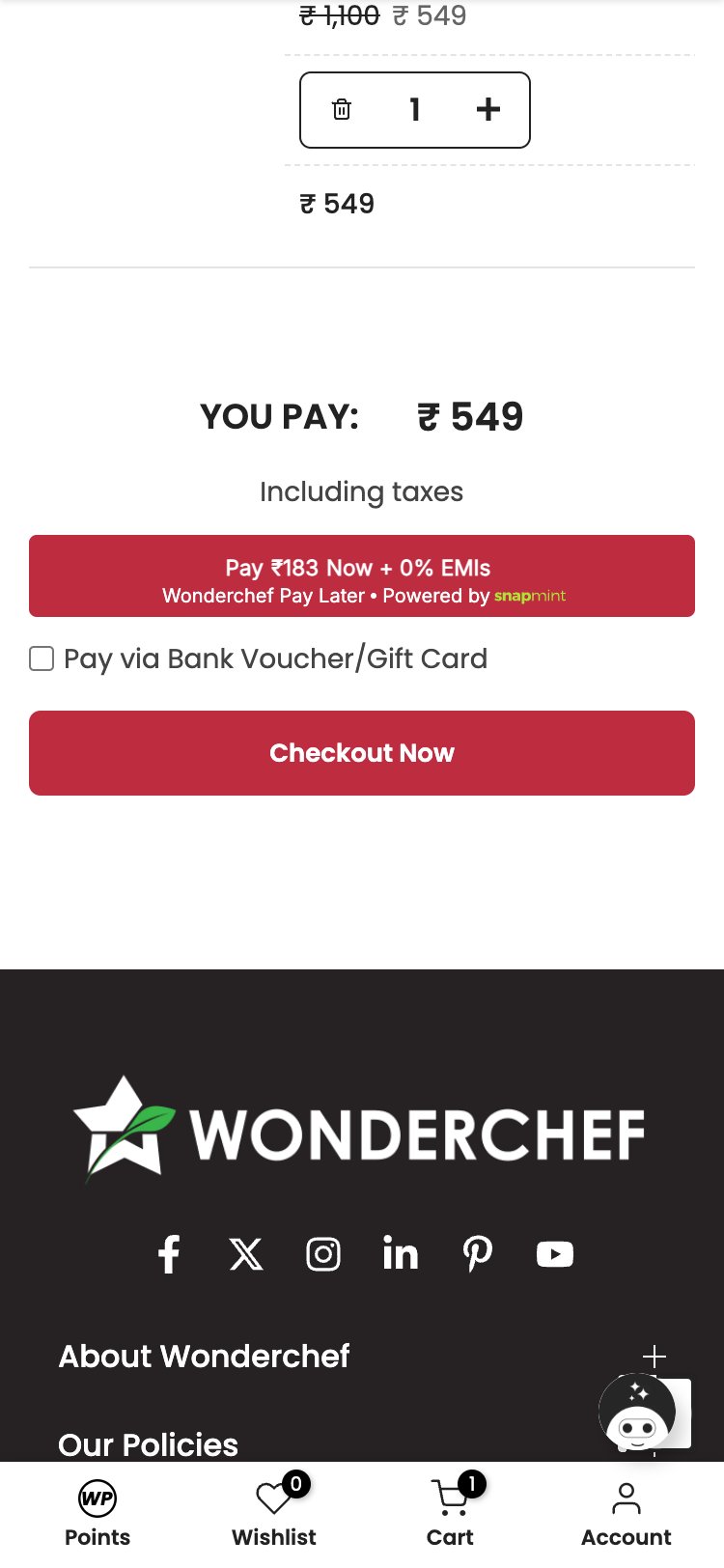
- The cart page contains only the cart item, order note, subtotal, and checkout buttons. No 'You may also like', 'Frequently bought together', or 'Complete your kitchen set' section.
- With an AOV likely around Rs. 2,000–4,000 (based on cart value of Rs. 2,499), cart cross-sell is the highest-leverage upsell moment — the shopper has already committed to buy.
- Bergner Home has 939 products and natural bundles (e.g., 'Add a lid for your kadhai', 'Customers also buy a matching tawa') — none of this is surfaced in cart.
- The King Linked Options app is installed (variant bundler) but appears to be used for variant selection, not cart upsell.
- Add a 'Complete your set' or 'Customers also bought' section below the cart item list, showing 3–4 relevant product recommendations.
- Use Shopify's native complementary products metafield or install a cross-sell app (ReConvert, Frequently Bought Together) to power personalized recommendations.
- For cookware sets, suggest accessories (cleaning brush, serving ladle set, storage containers) as quick-add items under Rs. 500 — these have high attach rate.
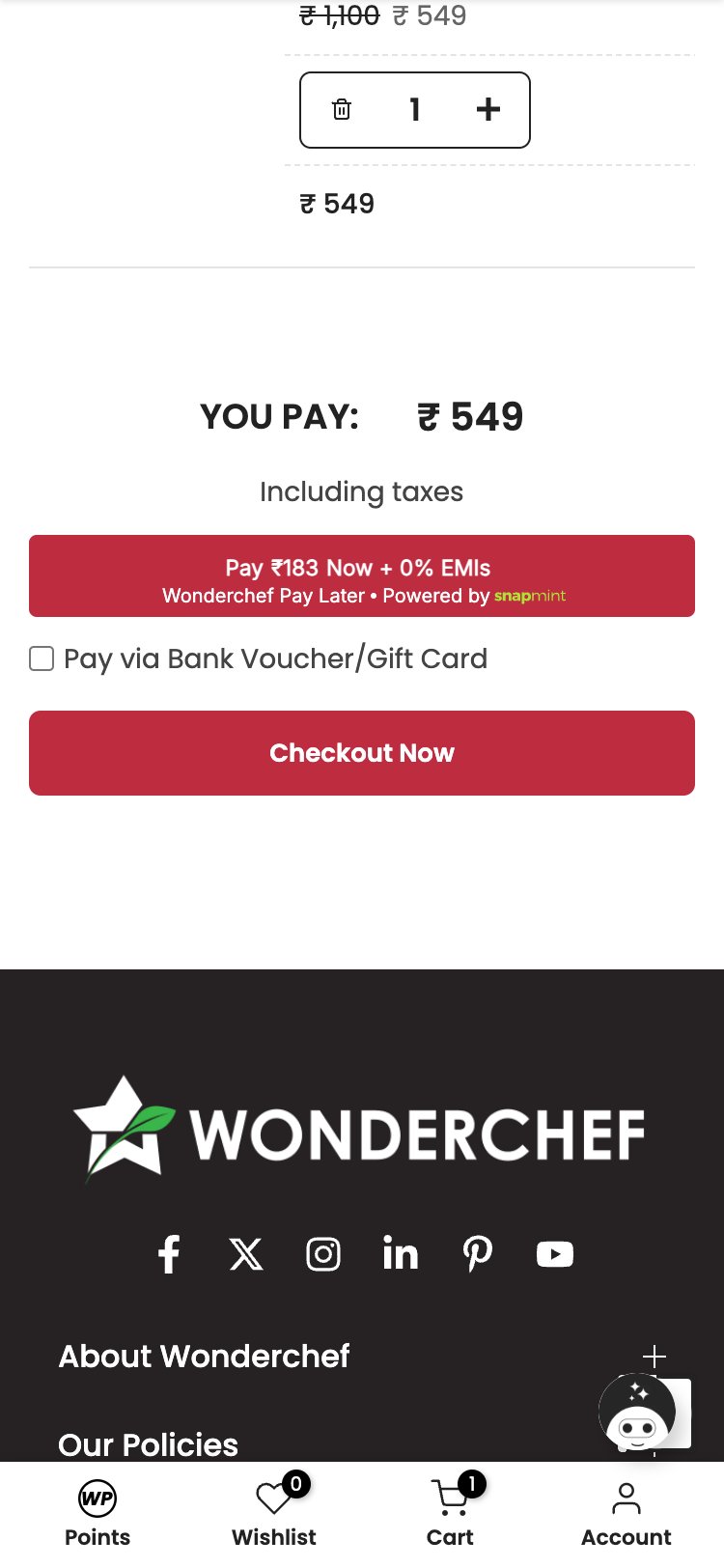
- The cart page has no trust icons, no payment method logos, no 'Easy Returns' or '100% Secure Checkout' badge.
- The cart is the highest-anxiety moment in the funnel — shopper is about to enter payment information. Trust signals here directly reduce abandonment.
- The BUY NOW button shows Google Pay, PhonePe, and Shiprocket logos — but these are the only payment-related signals on the page and appear only on the button itself.
- Bergner Home has a 5-year warranty (shown as feature icon on PDP) and a return policy — neither is surfaced in the cart to reduce purchase hesitation.
- Add a trust badge row below the checkout button: '100% Secure Checkout | Easy Returns | 5 Year Warranty | COD Available'.
- Include payment method icons (CCAvenue, PhonePe, UPI, Visa/Mastercard, COD) below the trust badges.
- Add a single-line return policy reminder: 'Not satisfied? Easy 7-day returns — no questions asked' with a link to the return policy.
App Ecosystem
What's installed vs what's missing from best-in-class Home & Living stores
Present (10)
Missing (5)
App Stack Assessment
Bergner Home has a functional app stack for a T3 brand — payments, shipping, returns, and promotions are covered. The critical missing piece is social proof: with zero reviews and no review app installed, the site loses what research consistently identifies as the #1 conversion driver for e-commerce. EMI and pincode delivery check are quick wins given the existing Shiprocket integration. The Spin & Win wheel should be replaced with a targeted offer popup (e.g. '10% off your first order') — same email capture goal, significantly lower JS weight and better UX.
Confidential — Prepared for Bergner Home by Growisto | April 2026